Where your zinc really goes: coating, dross and ash
Zinc is most of the running cost of a galvanizing plant. Only part of it ends up on the steel. Here is where the rest goes, and what you can do about each share.
Ask any galvanizer what their plant costs to run and the answer starts with zinc. At today's prices, zinc is usually two-thirds to four-fifths of the running cost per tonne, far ahead of fuel, acid or labour. Yet when we audit plants, we often find that a large share of the zinc bought never protects any steel. It leaves the plant as dross, as ash, or as coating far thicker than the customer asked for.
Every kilogram of zinc you buy goes one of three ways: onto the steel as coating, into dross at the bottom of the kettle, or into ash on the surface. A few per cent more is lost as splashes, drips and zinc on jigs. Each has its own causes and its own fixes.
1. The coating: surface area and thickness
The zinc that stays on the steel is the product of two numbers: the surface area per tonne and the coating mass per square metre. Surface per tonne depends entirely on the shape and thickness of the steel. Thin sections have far more surface per tonne than heavy ones.
| Section | Surface per tonne (approx.) |
|---|---|
| ISMB 300 beam | 26 m²/t |
| ISA 50 × 50 × 5 angle | 54 m²/t |
| Crash barrier W-beam, 3 mm | 85 m²/t |
| Solar lipped C, 100 × 50 × 20 × 2.5 | 104 m²/t |
Coating mass follows the steel thickness through ISO 1461 and IS 4759: thicker steel needs a heavier minimum coating, about 85 µm mean on steel over 6 mm and 55 µm on steel of 1.5 to 3 mm. A solar plant galvanizing 2.5 mm purlins therefore puts on much less coating per square metre than a tower plant, but has four times the surface per tonne. That is why solar galvanizers often use more zinc per tonne than structural galvanizers.
Over-coating is the hidden loss
Most of the coating above the specified minimum is waste. It comes from reactive steel (silicon and phosphorus), from long immersion, from high bath temperature, and from slow drainage. Of these, steel chemistry is the one galvanizers control least, which is why we explain it separately in our article on the Sandelin effect. The others are plant practice: keep the bath at 445 to 455 °C, immerse only as long as the steel needs to reach bath temperature, and withdraw at a controlled speed so excess zinc drains back.
2. Dross: the price of iron
Dross is a zinc-iron alloy, around 95 per cent zinc, that forms when iron dissolves into the bath and sinks to the floor. Every kilogram of iron that enters the kettle takes roughly 20 to 25 kg of zinc into dross with it. Iron arrives three ways: carried over in the flux film from pickling, dissolved from the steel during immersion, and dissolved from the kettle wall itself.
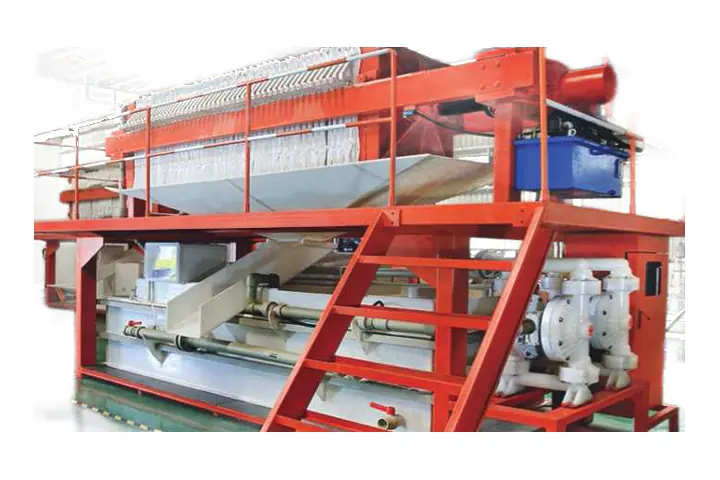
- Flux carry-over is the biggest controllable source. Flux contaminated by pickling acid can hold several grams of iron per litre; every dip carries it into the zinc. Continuous flux regeneration keeps iron low.
- Long immersion and high temperature dissolve more iron from the steel.
- An overheated kettle wall dissolves itself into dross and shortens kettle life at the same time. Even furnace heating is a zinc saving as well as a kettle saving.
3. Ash: oxide and chloride on the surface
Ash is skimmed from the bath surface: zinc oxide, zinc chloride from the flux, and a lot of metallic zinc trapped in it. Wet or cold steel makes the flux boil violently and throws zinc into the ash. A dryer that delivers dry, warm steel to the kettle reduces ash noticeably. Careful skimming, without stirring metal into the ash, helps too.
Because ash contains so much metallic zinc, recovering it on site and returning the metal to the kettle is one of the fastest paybacks in a galvanizing plant. Sold as ash, the same zinc fetches only a fraction of its value.
What to do first
- Measure: monthly zinc bought, tonnes galvanized, dross and ash sold. Zinc per tonne is the number to track.
- Check flux iron and install flux regeneration if it is high.
- Install or repair the dryer so steel enters the zinc dry and warm.
- Control bath temperature and immersion time; train withdrawal speed.
- Recover zinc from ash on site.
- Talk to your steel suppliers about silicon.