What to do with spent pickling acid: regenerate, recover or neutralise
Spent acid is a small stream carrying most of the iron and salt. Regeneration, acid recovery, sale and neutralisation compared, with their effect on the ETP.
Spent pickling acid is a small stream with a large effect. A plant pickling 1,500 t of steel a month may produce only 60 to 70 m³ of it, yet that acid carries most of the iron and chloride that leave the pickling line. What happens to it decides how much lime the ETP uses, how much sludge it makes, and how much salt a ZLD plant has to dry.
What spent acid is
As hydrochloric acid pickles steel, it turns into iron chloride. A bath is spent when free acid has fallen and iron chloride has risen to the point where fresh acid no longer brings it back, typically with a little free acid left and well over 100 g/L of iron. See pickling right for keeping baths working longer.
The options
| Option | What happens | What comes back | Best for |
|---|---|---|---|
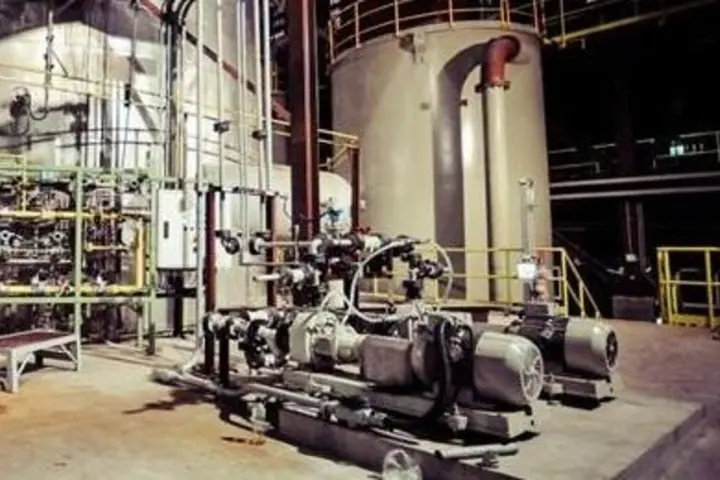
| Acid regeneration by spray roasting | The acid is sprayed into a hot reactor. Iron chloride turns into iron oxide and HCl gas, which is absorbed as fresh acid | Regenerated hydrochloric acid, and iron oxide | Large volumes; plants that want to close the acid loop |
| Free acid recovery | A resin or membrane separates the free acid from the iron | The free acid, for reuse | Baths dumped with a lot of free acid still in them |
| Sale to an authorised user | The iron chloride solution is used elsewhere, for example to make water treatment chemicals | Nothing, but no treatment cost | Where a reliable buyer and the permissions exist |
| Neutralisation in the ETP | Lime or caustic soda | Nothing: sludge and dissolved salt | Small volumes, or the last resort |
Our 3D model of a 10 m³ an hour spray roasting plant shows the whole regeneration process: ARP-10 in 3D.
What neutralising it costs
Neutralising one cubic metre of spent acid with 130 g/L of iron and 3 per cent free acid takes about 257 kg of hydrated lime, makes about 844 kg of filter cake at 35 per cent solids, and leaves about 315 kg of calcium chloride dissolved in the water. In a ZLD plant, every kilogram of that salt has to be evaporated and dried, so a cubic metre of spent acid costs far more at the end of the chain than at the start.
Zinc in the acid
Galvanizers who strip rejected work in the pickling tanks add zinc to the iron. Acid carrying both is hard to regenerate and hard to sell. A separate stripping tank keeps the pickling acid clean and lets the zinc be recovered on its own.
Choosing
- Measure first: spent acid a month, the iron and free acid in it, and the zinc if you strip.
- Above roughly 300 m³ a month, regeneration usually suits better than neutralising.
- Below that, free acid recovery and keeping baths working longer cut the volume.
- Whatever is left goes to the ETP, and the ZLD plant must be sized for it. See designing the whole plant.