Electro-galvanizing wire: current, coating and the rectifier
In electro-galvanizing, the coating is bought as electricity. How to work out the current a line needs, why current density matters, and how the plating cells are arranged.
An electro-galvanizing line plates zinc onto moving wire from an acid zinc bath. The wire is the cathode, zinc anodes or insoluble anodes sit in the bath around it, and a rectifier pushes current from anode to wire. Every gram of zinc on the wire is put there by current, so the coating you sell, the line speed and the rectifiers are tied together by simple arithmetic.
From coating to current
One ampere flowing for one hour deposits about 1.22 g of zinc, if all the current goes into plating. In practice a few per cent goes into side reactions, so plants use a current efficiency of around 95 per cent. A coating thickness of 1 µm of zinc weighs about 7.14 g/m².
| Step | Worked example |
|---|---|
| Line | 24 strands of 2.5 mm wire at 40 m/min |
| Wire surface per hour | π × 0.0025 m × 2,400 m/h × 24 ≈ 452 m²/h |
| Coating | 30 g/m², so about 13.6 kg of zinc per hour |
| Current | 13,560 g/h ÷ 1.22 g/Ah ÷ 0.95 ≈ 11,700 A |
| Rectifiers | Four cells, each with about 2,900 A; with 20 % headroom, 4,000 A sets |
Current density
The current is spread over the wire surface that is in the solution at any moment. Divide the current by that area and you have the current density, in amperes per square decimetre. Too low, and the line has to be long and slow to put the coating on. Too high, and the deposit burns: rough, dark and powdery at the edges, with poor adhesion. High-speed acid baths for wire are run at tens of A/dm²; the right figure depends on the bath, its temperature and how fast the solution moves past the wire.
The plating cells
- Several cells in a row, each with its own rectifier, so current can be set cell by cell.
- Contact rolls before and after each cell carry current into the wire; their condition decides how evenly current is shared between strands.
- The gap between anode and wire sets the voltage: a smaller, even gap needs less voltage and less power.
- Bath temperature, filtration and solution flow are controlled, because they set the current density the bath can take.
Before and after plating
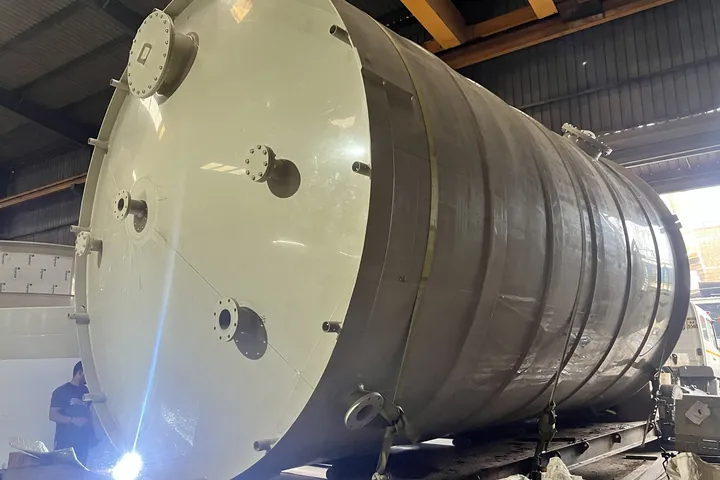
Zinc only plates well on clean steel, so the line starts with degreasing, rinsing and pickling, often electrolytic pickling, which cleans the wire in a short tank by passing current through the acid. After plating come rinsing, passivation and drying. SHIVAS Reinplast builds the PP tanks, fume extraction and effluent treatment for these sections.