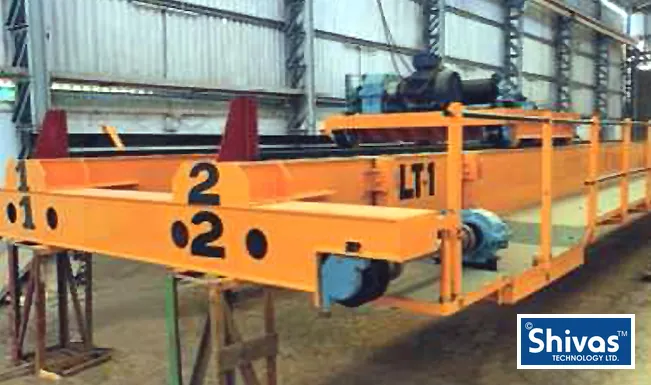
Work cool enough to unjig quickly.
SHIVAS Technology · Galvanizing
Quench & passivation
Quench tanks that cool the work for handling, and passivation tanks that protect fresh zinc from white rust in storage.
- Water quench
- Passivation
- Cooling circuit
- PP or MS tanks
Water quenchstops alloy growth, cools for handling
Passivationthin film against white rust
Cooling circuitkeeps quench water in range
Overview
Fresh galvanized steel leaves the kettle at about 450 °C. Quenching in water stops further zinc-iron alloy growth, brightens the finish and makes the work safe to handle sooner. Passivation then leaves a thin protective film that reduces white rust when work is stored or stacked wet.
SHIVAS sizes quench and passivation tanks for your loads. The heat the work brings into the quench is not wasted: hot quench water is pumped through the flux tank heat exchanger, which warms the flux and cools the quench at the same time.
Why it pays
Passivation limits white rust.
Consistent quench temperature.
Technical specification
Typical ranges. Every unit is sized to your duty; the offer carries the exact figures.
| Tanks | MS or PP, sized to the jig |
|---|---|
| Cooling | Circulation with cooling tower or exchanger |
| Passivation | Chromium-free chemistries on request |
Options, build and uses
Options
- Spray quench
- Automatic dosing
- Quench heat recovered to warm the flux tank
How we build it
- Fabricated by SHIVAS
Who it is for
- Batch and spin plants
Part of
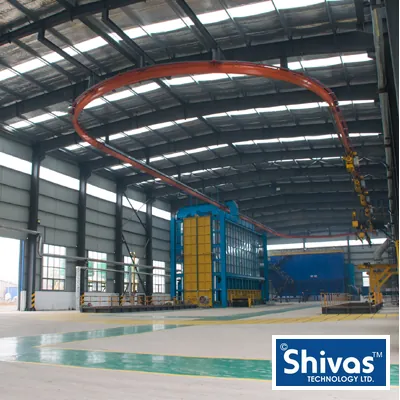
3D model
Computer model from a real SHIVAS project. It shows the arrangement; it is not a photo.
From our engineers
Questions buyers ask
Is quenching always good?
Not for every product; some buyers ask for air cooling. We design for your customers.
Enquiry · Quench & passivation
Get a quote
Tell us the capacity, sizes and site. We reply with a scheme, a layout and an offer.
What we need for your quote
- Load size
- Throughput
- Customer finish requirements