Heat in wire drawing: wire temperature, cooling and strain ageing
Drawing turns nearly all its work into heat. How hot the wire gets in each die, why heat ages high-carbon wire and makes it brittle, and how cooling helps.
Almost all the energy a drawing machine puts into the wire comes out as heat. Some goes into the die and the block; the rest stays in the wire. On a multi-block machine the heat adds up from die to die unless every block takes it away again. For low-carbon wire that mostly costs lubricant and die life. For high-carbon wire it can cost the wire itself.
How hot does it get?
The work done in one die, per unit volume of wire, equals the drawing stress. If all of it stayed in the wire, the temperature rise would be the drawing stress divided by the heat capacity of steel per unit volume, which is about 3.7 MPa for each degree:
temperature rise in °C ≈ drawing stress in MPa ÷ 3.7
A die running at a drawing stress of 500 MPa can therefore add well over 100 °C before the block cools the wire again, and friction heats the surface layer far more for an instant. The wire calculator shows the drawing stress for every die, so the heat each die puts in can be read straight off it.
Why heat matters: strain ageing
Heavily drawn high-carbon wire is full of dislocations. Held warm, carbon and nitrogen atoms move to them and pin them. Strength rises, ductility falls, and the wire fails the torsion test with a split along its length instead of a clean break: delamination. Ageing goes on during drawing, while the wire is hot, and after it. It speeds up as the wire spends time in the range of roughly 200 to 300 °C, so the aim is to bring the wire back down on every block before the next die. Steels with more free nitrogen age more readily.
Heat also breaks down dry soaps. Burnt soap lubricates badly, the next die works harder, and the wire gets hotter still.
Taking the heat away
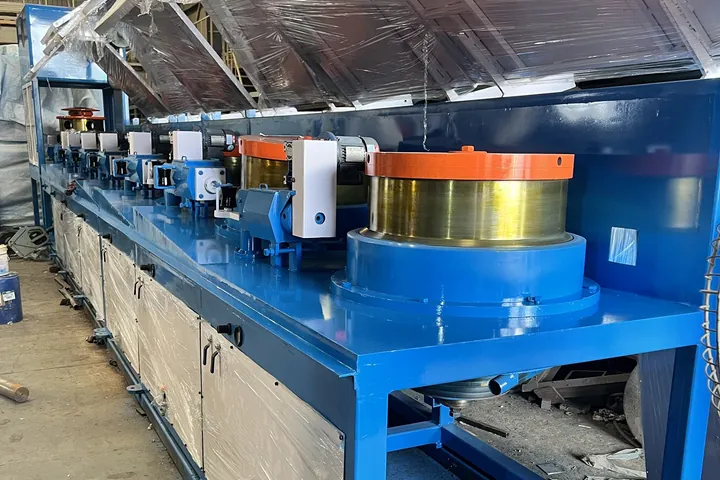
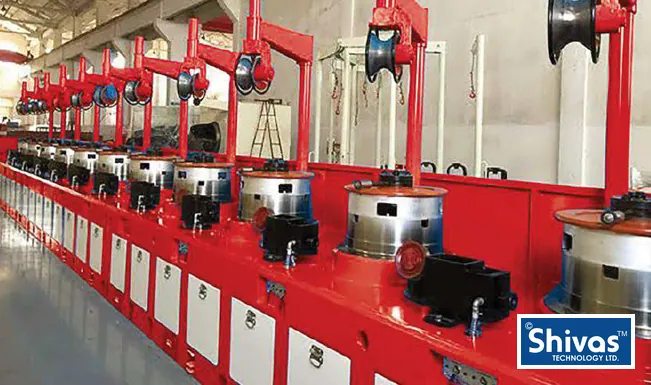
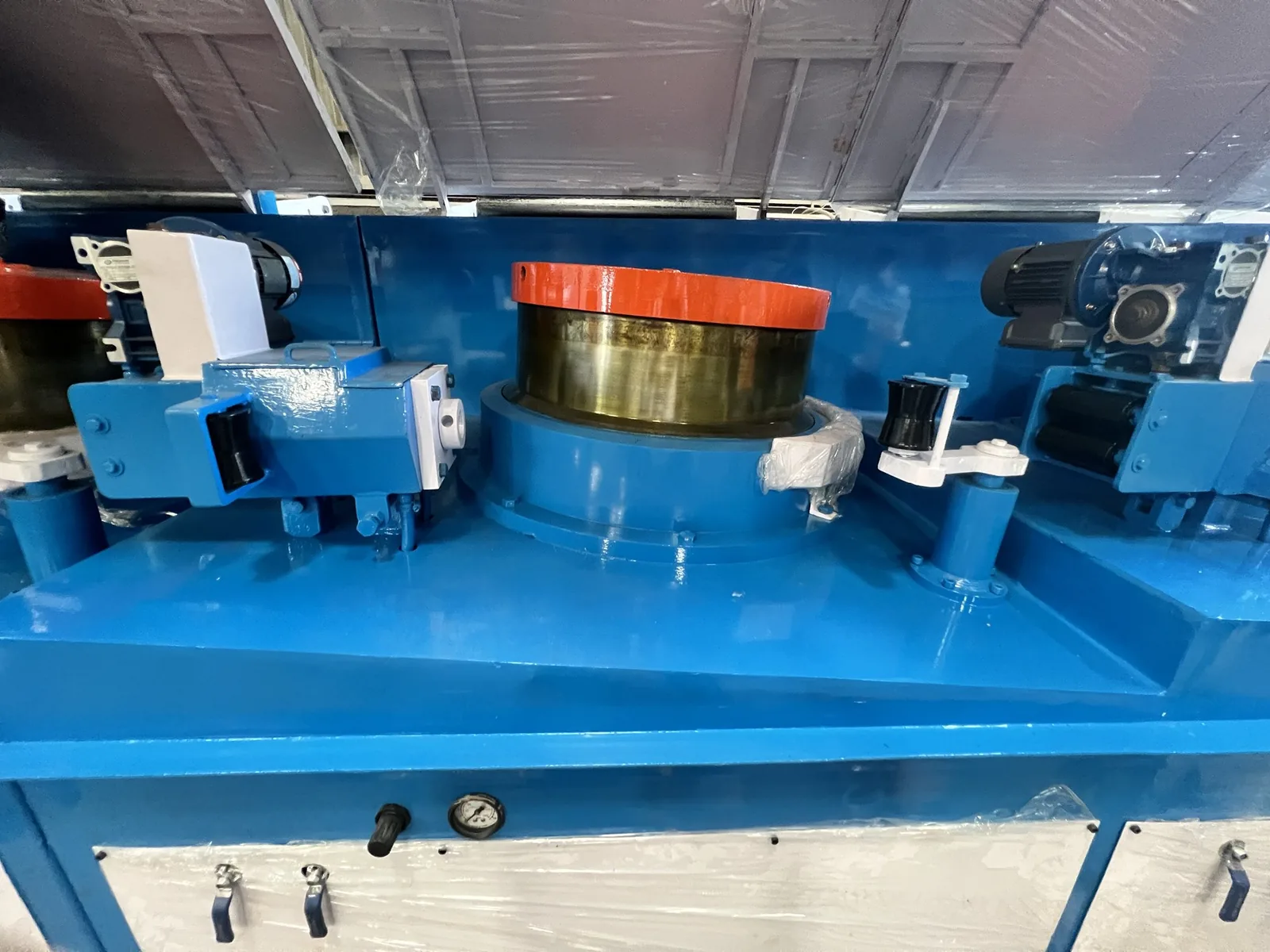
- Block cooling. Water flows inside each block, and the turns of wire on the block give up their heat through its wall. More turns, a clean water side and enough flow mean more cooling.
- Die cooling. Water-cooled die holders take heat out where it is made.
- Air on the wire between blocks, on machines that use it.
- Clean water. Scale inside the blocks insulates them. Treated water and regular cleaning keep the cooling you paid for.
Measuring it
- Bright wire reflects infrared, so an infrared thermometer pointed at the wire reads low. Measure on the block surface, or with a contact probe on stopped wire.
- Log the cooling water temperature in and out of each block. With the flow, the rise gives the heat removed, block by block.
- Use the torsion test as the final judge. Delamination in torsion is the practical sign that the wire got too hot for too long.
Speed, passes and heat
A faster line makes more heat per second and leaves the wire less time on each block to cool, so the top speed for high-carbon wire is often set by cooling, not by the motors. Lighter reductions in the later passes lower the drawing stress, and so the heat, where the wire is strongest and most sensitive.
| Sign | Likely cause | What to do |
|---|---|---|
| Dark, burnt soap on the wire | Wire and die too hot | More cooling; lower speed; a lighter pass |
| Delamination in torsion | Strain ageing from heat | Check block cooling and wire temperature; review the die sequence |
| Breaks after a speed increase | Heat; lubricant failure | Go back to the old speed; raise the cooling first |
| One block much hotter than the others | A heavy pass or blocked cooling | Rebalance reductions; clean that block's water side |