Installing a new zinc kettle: setting, insulation and the first melt
A kettle's life is often decided in its first week. How to receive, set and insulate it, dry out the furnace and melt the first zinc without harming the walls.
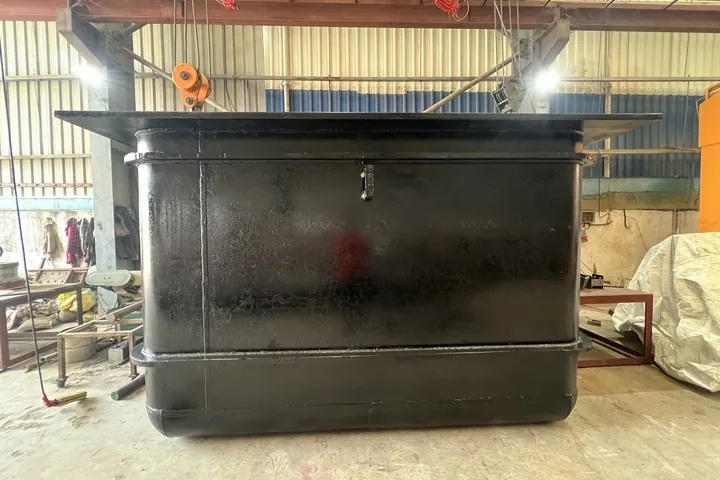
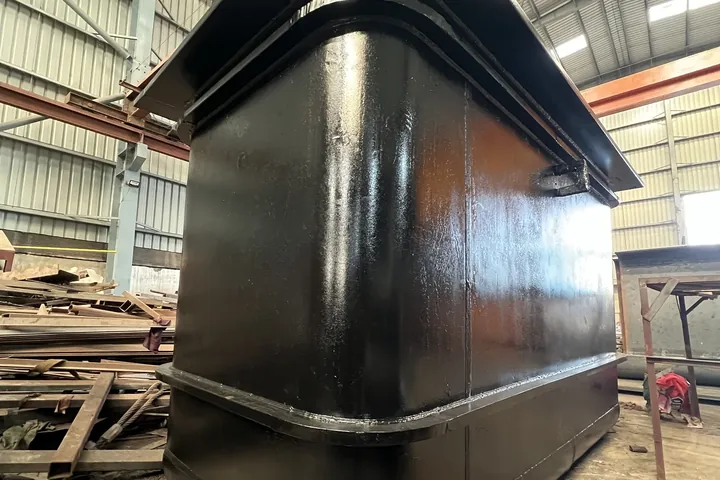
A galvanizing kettle is a welded box of special steel that holds a hundred tonnes of zinc or more at 450 °C and is heated through its own walls. It is built to last for years, but mistakes in its first week can take years off that life. Most of them are avoidable with a written plan for receiving the kettle, setting it, drying out the furnace and melting the first zinc.
Receiving the kettle
- Check the main dimensions against the drawing: length, width, depth, the rim, and the positions of the supports and lifting lugs.
- Ask for the weld inspection records. Corners and seams carry the highest stress; on SHIVAS kettles the corners are formed from one plate on our press, so the corner is parent metal and the seams sit in the straight walls.
- Look for dents, gouges and arc strikes on the inner faces. Each is a place where the zinc can start an attack.
- Lift only by the lugs, with spreader beams, so the walls are not pulled out of shape.
Insulating the right places
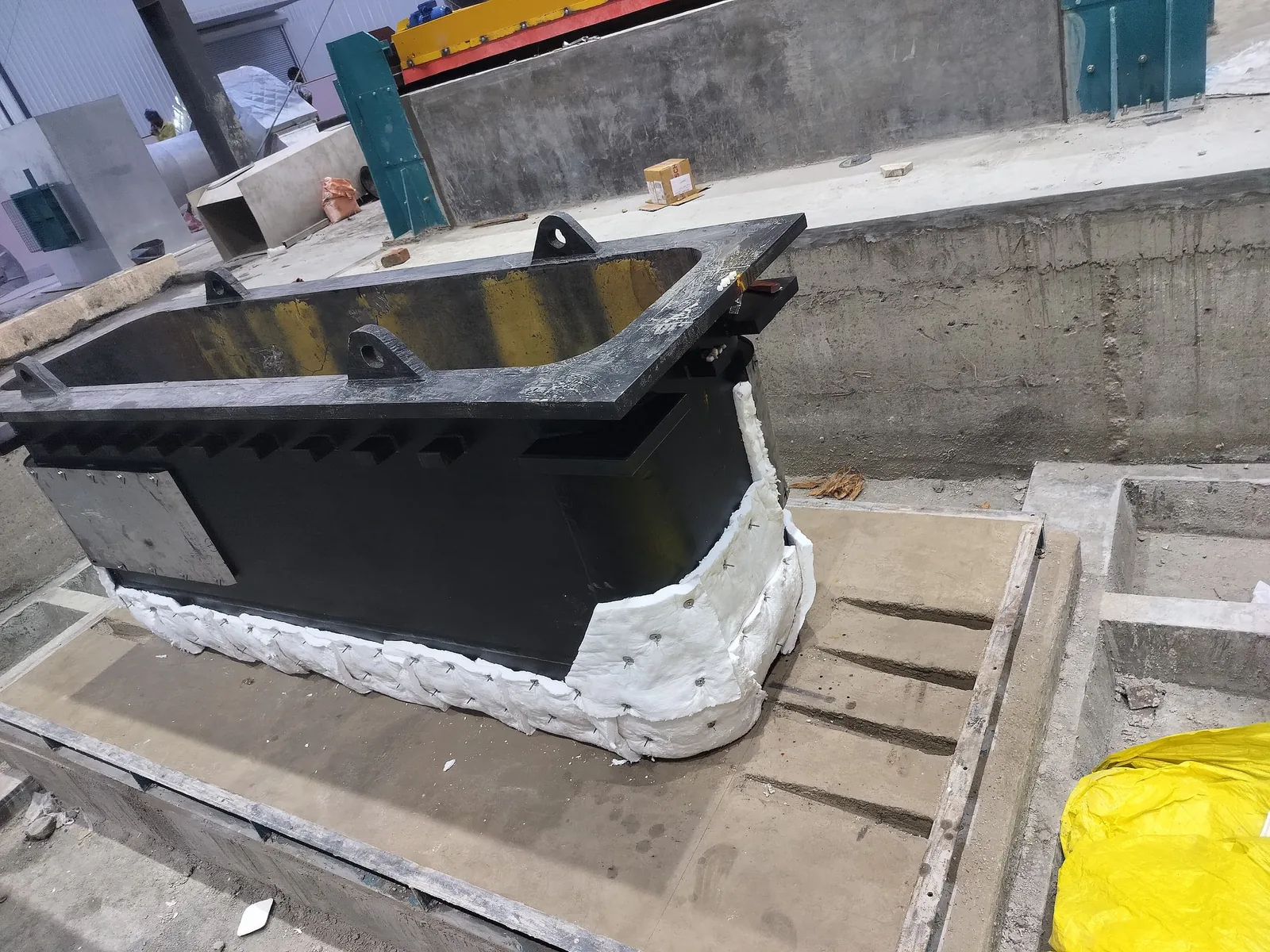
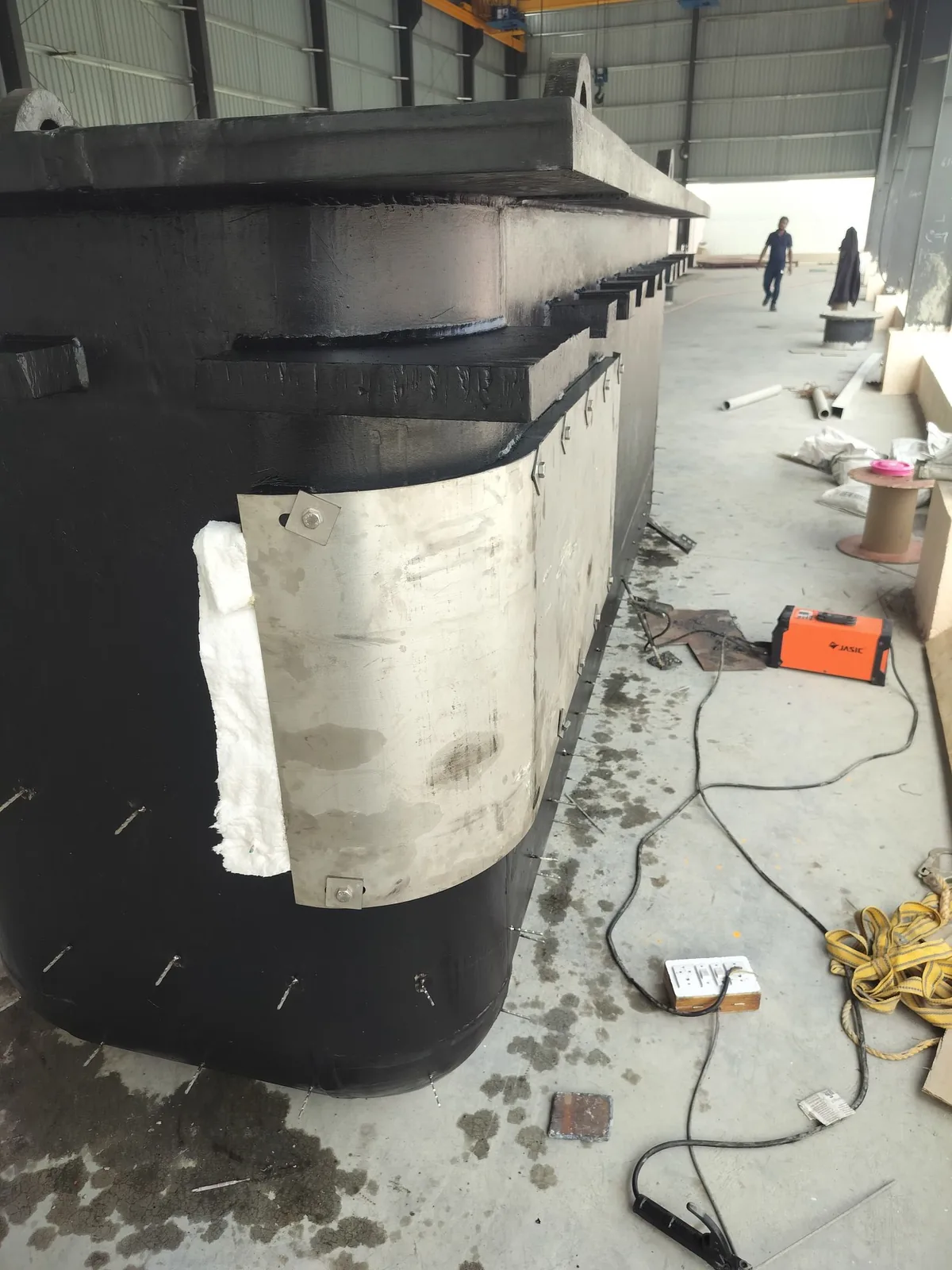
The principle is simple: heat the walls where the zinc moves, not where the dross lies. Dross conducts heat poorly, so a wall heated behind a layer of dross runs hotter than the zinc and wears fast. The bottom of the kettle and the lowest part of the walls are therefore kept out of the hot gas, and the gaps around the kettle are sealed so hot gas cannot bypass the heating zone. The photographs show the kind of work involved: insulation pins welded to the kettle, ceramic fibre pinned along the lower edges, and a stainless steel sheet fitted over the fibre.
Setting it on the furnace
- Check that the base is level and the supports are where the drawing puts them, so the bottom is carried evenly.
- Leave room to grow. Steel grows about 5.7 mm per metre of length between room temperature and 450 °C: a 7 m kettle grows about 40 mm, a 13 m kettle about 74 mm. Nothing may tie the kettle rigidly to the furnace casing or the floor.
- Fit and test every instrument before the first heat: wall thermocouples along the length and at more than one depth, the zinc thermocouple, and the thermocouples in the zinc leak pits under the kettle.
- Check that the leak pits are dry and clear. Molten zinc and water must never meet.
Drying out the furnace
New refractory and castable linings hold water. Heated too fast, that water turns to steam inside the lining and spalls it. Follow the lining maker's dry-out schedule: slow ramps with holds, the burners on low fire or pulsing, the flue open, until the moisture is gone. The kettle walls warm up with the furnace, so their thermocouples are in use from the start.
The first melt
- Load dry zinc. Ingots must be dry: moisture trapped in an ingot that meets molten zinc turns to steam with explosive force.
- Stack the ingots loosely. Zinc expands more than steel as it heats. Ingots wedged tight against the walls can push them outwards before they melt.
- Control on the walls, not on the zinc. During the melt the zinc thermocouple reads low for hours while the walls do all the work. Limit the firing on the wall temperatures, and keep every zone well below about 480 °C.
- Be patient. A large kettle takes a day or more to melt. The burner calculator estimates the time for your kettle.
- Bring the bath up gently to working temperature, then top up with dry ingots warmed at the kettle edge.
The first month
Log the wall temperatures every shift and compare the zones. A zone that runs hotter than the rest needs attention while the kettle is new, not when it is thin. Check the rim and the top closures for movement, and keep dipping gentle while the operators learn the new kettle.
| Stage | Check |
|---|---|
| Receipt | Dimensions, weld records, no dents or gouges, lifted by the lugs |
| Setting | Base level, supports as drawn, room to expand, insulation where specified |
| Instruments | Wall thermocouples in every zone, zinc thermocouple, leak pit thermocouples tested |
| Furnace dry-out | The lining maker's schedule, slow ramps, holds |
| First charge | Dry ingots, stacked loosely, nothing wedged against the walls |
| First melt | Firing limited on wall temperature, burners balanced |
| Working temperature | Reached gently; topped up with dry, warmed zinc |
| First month | Wall log reviewed every week; rim and closures checked |